The biggest six offenses in the environmental book
Tags
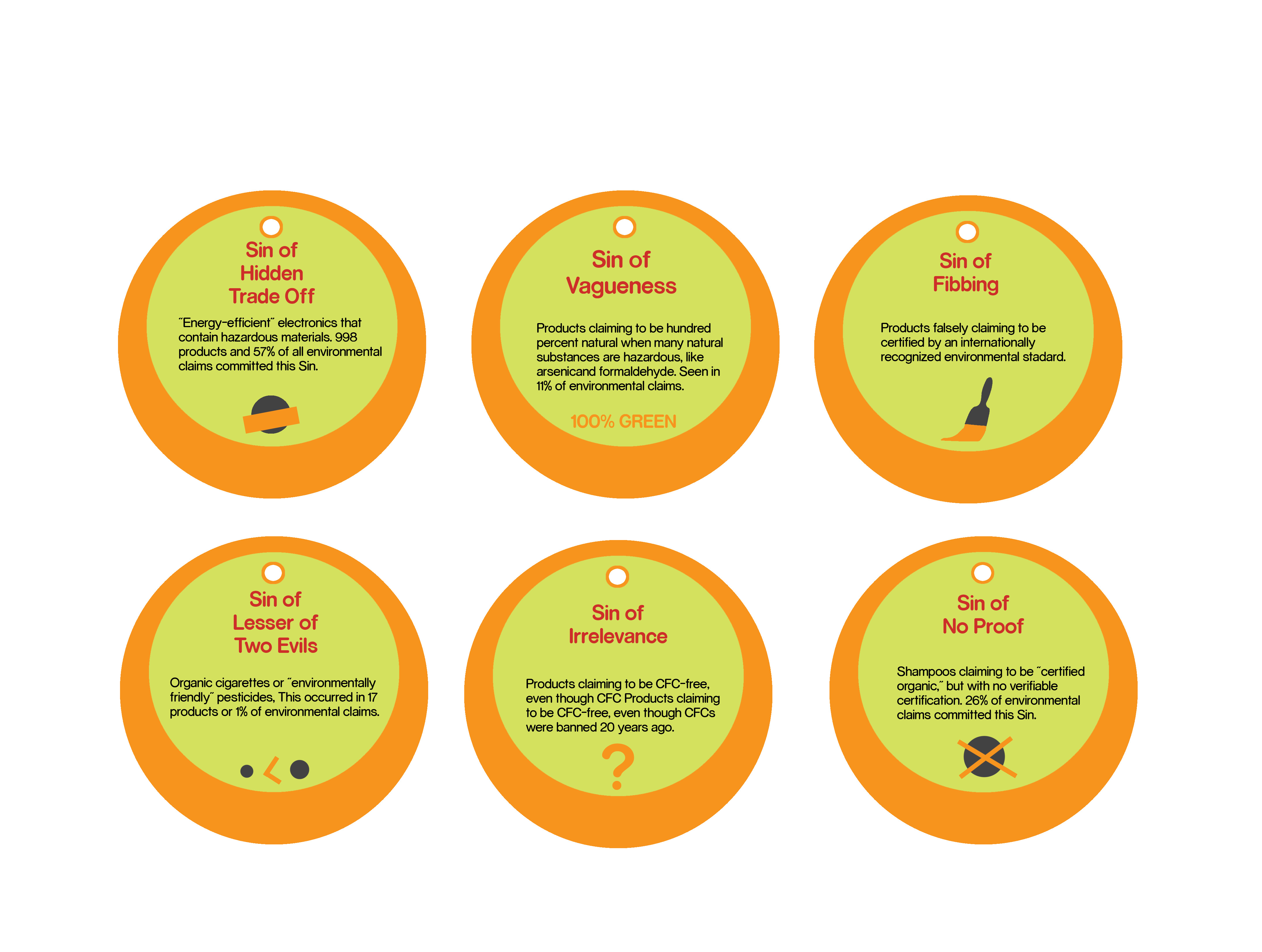
Collect all six tags, or download them online as a quick reminder. Each of the tags given out in store has a handy hole with an elastic to hang from - so you can either hang them up at home, or even place them on those products that you feel deserve a "Stop Greenfraud" logo on them.
Sin of the Hidden Trade Off
 An example of this is "Energy-efficient" electronics that contain hazardous materials or are harmful in their assembly. While the efficiency may be played up, the manufacture is played down, or vice versa. A cleanly manufactures product might still take many years to decompose or break down in the garbage. You have to look at the entire product lifecycle to really determine the environmental impact of a product, and some manufacturers have done so in their product designs.
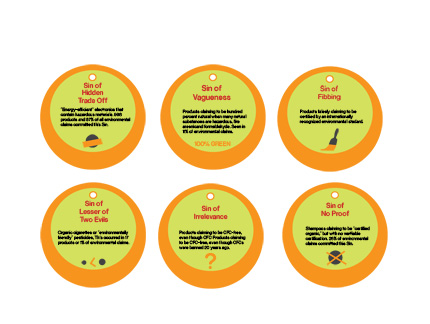
Download these tags, and place one where it will raise awareness at home or other places!
Sin of Vagueness
 This includes products that are claiming to be 100% natural when many naturally-occurring substances are still hazardous, such as arsenic, mercury and formaldehyde. Reading between the lines on this one is a way to see if the vague promises have something to them.
Sin of Outright Fibbing
 An example of this is those products that are falsely claiming to be certified by an internationally recognized standard such as FSC, EcoLogo, Energy Star or Green Seal, when in fact they do not meet their standards. One interesting fact is that some of these logos, such as FCS (for paper grown responsibly) has a tracking number that can be followed back through the chain of production to check for the truth of suck a claim. A logo such as the recycling symbol has no such verification process. Someone could, theoretically, google the logo and paste it into their product design without having to go through anyone else to do so.
Sin of the Lesser of Two Evils
 Organic cigarettes or "environmentally friendly" pesticides are an example of this. Regardless of how organic or friendly they have been made, the fact remains: they are still harmful for you, and or the environment, and so such a claim is stiff treading the line of fact vs fraud.
Sin of Irrelevance
 Some products could be claiming to be CFC-free, even though CFCs were banned 20 years ago as an example. Claims need to be valid.
Sin of No Proof
 An example is shampoos claiming to be "certified organic," but with no verifiable certification of any sort, or use of a logo such as the recycle logo on its own with no need for certification. In some ways, this is related to the sin of Fibbing - if your claim is unverifiable, then is it true or not?